


A New Peak for the World’s Largest Cryptocurrency
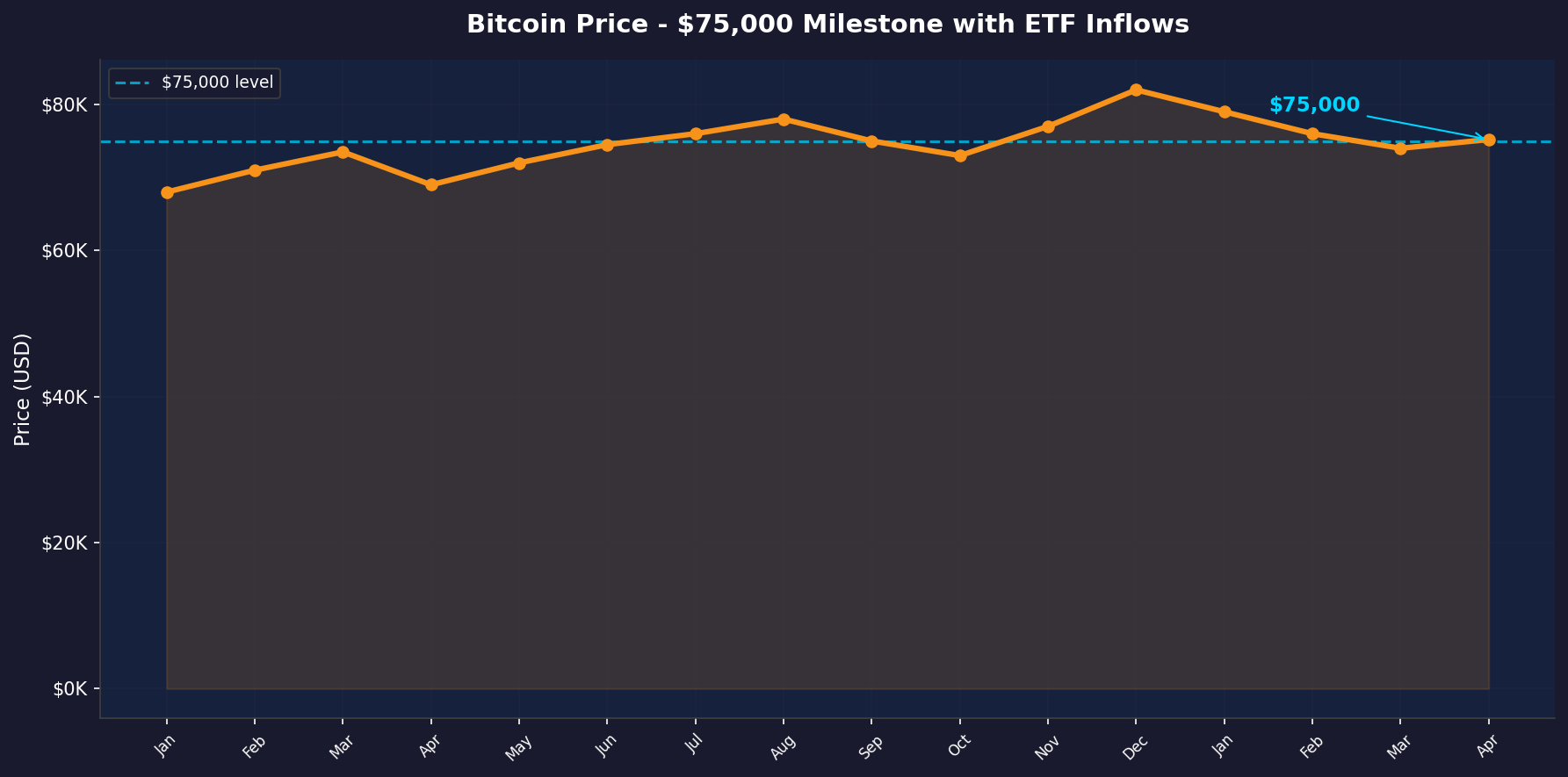
Bitcoin crossed $75,000 this week, shattering the previous record of roughly $73,800 set in March 2024. The rally has been building for weeks, but what makes this move worth paying attention to isn’t the number itself. It’s who’s buying.
Spot Bitcoin ETFs, approved in January 2024, gave traditional finance a clean way to get Bitcoin exposure without worrying about private keys and cold storage. Fifteen months in, those products are outperforming nearly every forecast.
ETF Inflows: The Engine Behind the Rally
The numbers are striking. Spot Bitcoin ETFs pulled in over $12 billion in net inflows during Q1 2026 alone. BlackRock’s iShares Bitcoin Trust (IBIT) dominates the field with more than $50 billion in assets under management and consistently posts the biggest daily inflows. Fidelity’s Wise Origin Bitcoin Fund and Grayscale’s Bitcoin Trust (GBTC) trail behind, while ARK 21Shares, Bitwise, and Invesco have carved out smaller but meaningful slices.
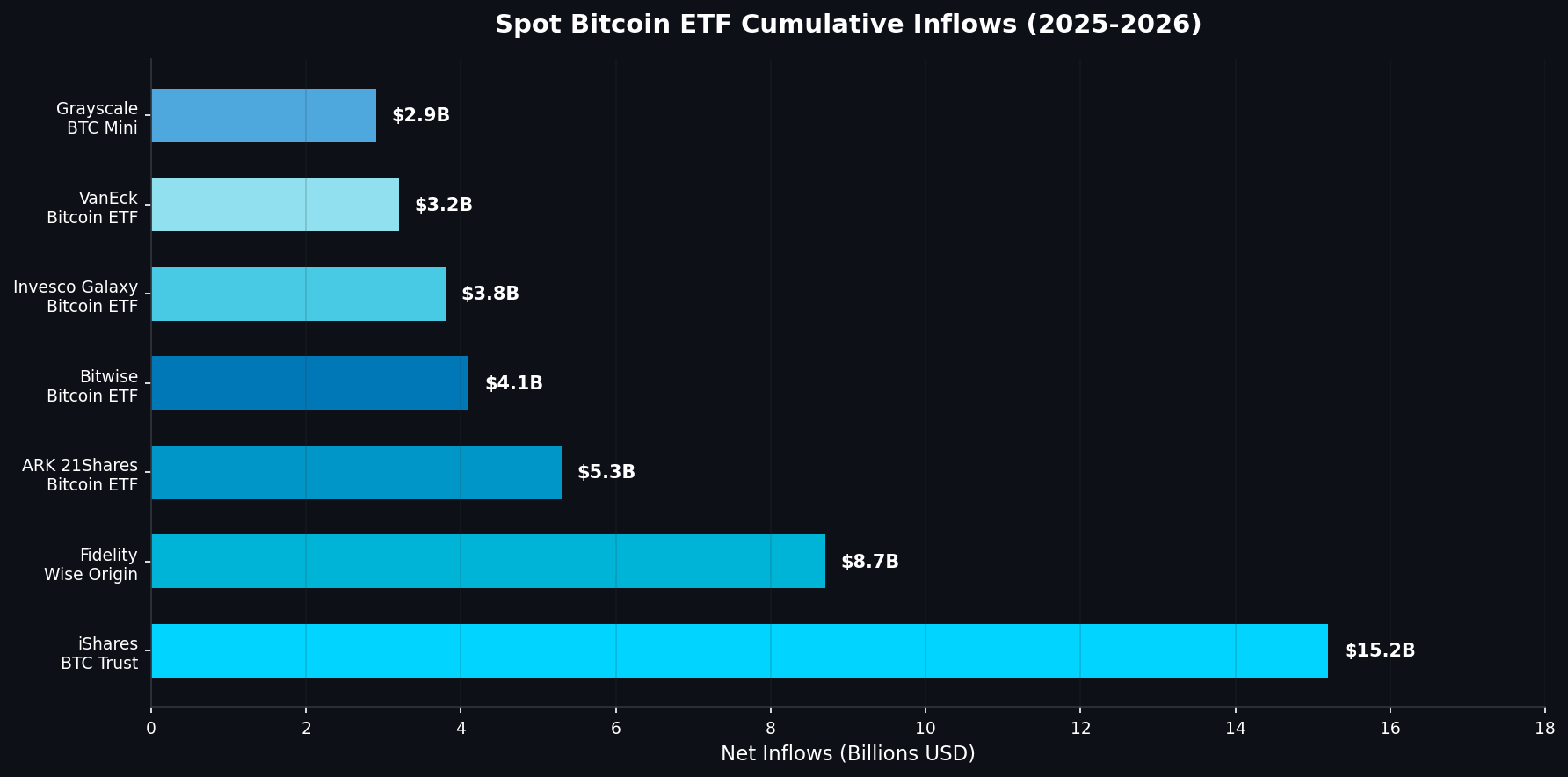
ETF flows have stayed positive for nine straight weeks — a streak Bitcoin has never seen before. Daily net inflows sit in the $300 million to $800 million range, which looks less like hot money chasing a rally and more like institutions dollar-cost averaging into positions they plan to hold.
The Institutionalization Thesis
This rally doesn’t look like 2017 or 2021, and the differences matter.
Pension funds, endowments, sovereign wealth funds, and family offices are allocating through regulated, audited vehicles now. That kind of money doesn’t panic-sell the way retail leverage does. The infrastructure has also hardened since the FTX and Celsius blowups of 2022 — custody solutions are better, insurance products exist, and regulators have at least drawn some boundaries.
The macro backdrop hasn’t hurt either. Interest rates have stabilized, inflation expectations have cooled, and portfolio managers are hunting for assets that offer upside alongside diversification. Bitcoin’s hard cap of 21 million coins fits neatly into the “digital gold” narrative.
The Halving Effect
The April 2024 Bitcoin halving, which reduced the block reward from 6.25 to 3.125 BTC, continues to exert upward pressure on price. Historically, Bitcoin has experienced its most significant price appreciation in the 12 to 18 months following a halving event. The reduction in new supply, combined with growing demand, creates a classic supply-demand imbalance.
Analysts at Glassnode estimate that the daily new supply of Bitcoin is now approximately 450 BTC, while daily demand from ETF buyers alone averages over 1,200 BTC. This structural deficit is being absorbed from existing holder reserves, a dynamic that has historically preceded sustained price appreciation.
Analyst Price Targets and Outlook
Wall Street analysts have responded to the new high with revised price targets. Standard Chartered raised its year-end 2026 target to $120,000, citing continued ETF adoption and the potential for additional sovereign wealth fund allocations. Bernstein analysts have maintained a $150,000 target, arguing that Bitcoin’s market capitalization should approach that of gold over the next several years.

However, not all analysts are uniformly bullish. JPMorgan strategists have cautioned that Bitcoin’s current valuation already prices in significant future adoption, leaving limited margin for error. “At $75,000, Bitcoin’s realized market cap exceeds $1.4 trillion,” noted one JPMorgan analyst in a recent research note. “Any disruption to the ETF inflow narrative could trigger a sharp correction.”
Risks and Headwinds
The rally isn’t without vulnerabilities. U.S. cryptocurrency regulation is still unsettled despite the ETF approvals, and new legislation in Congress could layer on compliance requirements that spook both issuers and investors.
A resurgence in inflation, a hawkish Fed pivot, or a broader equity sell-off would all dent institutional appetite for risk assets. There’s also concentration risk: a handful of providers hold the bulk of ETF assets, and any operational or legal trouble at one of them could ripple through the market.
Volatility hasn’t gone anywhere either. Ten to 20 percent drawdowns are routine even in bull markets, and leverage magnifies those swings. Position sizing still matters.
Is This Rally Different?
The evidence points to yes. ETF-driven institutional buying has created a more stable, transparent market with a broader, more sophisticated investor base. The infrastructure is sturdier than it’s ever been, and the “digital gold” narrative has only gained credibility.
Bitcoin is still a young asset class, though. The same forces pushing it higher could reverse fast if sentiment turns. For now, $75,000 marks how deeply Bitcoin has worked its way into the financial system — and how much further it might still go.

References
- https://www.blackrock.com/us/individual/products/329295/
- https://www.bloomberg.com/quote/IBIT:US
- https://www.glassnode.com/insights
- https://www.reuters.com/markets/currencies/bitcoin-etf-inflows/
- https://www.coindesk.com/markets/
- https://www.bernstein.com/research/crypto
- https://www.standardchartered.com/research/