

The AI Gadget Era Is Real: 11 Million Units and Counting
The era of dedicated AI hardware has arrived — and it looks different than the enthusiasts imagined.
Approximately 11 million AI gadgets shipped globally as of early 2025, according to industry trackers. That number will keep growing. But the dominant products are not the ones that generated the most headlines. Meta Ray-Ban Smart Glasses — sold over a million units — are the category's first genuine hit. The Rabbit R1 sold hundreds of thousands. The Humane Pin, despite raising over $200 million and generating intense media coverage, sold modest quantities and reportedly explored a sale in late 2024.
This tells you something important about where AI hardware is actually going: not toward replacing your phone, but toward making specific existing behaviors more convenient.
The Three Categories That Actually Exist
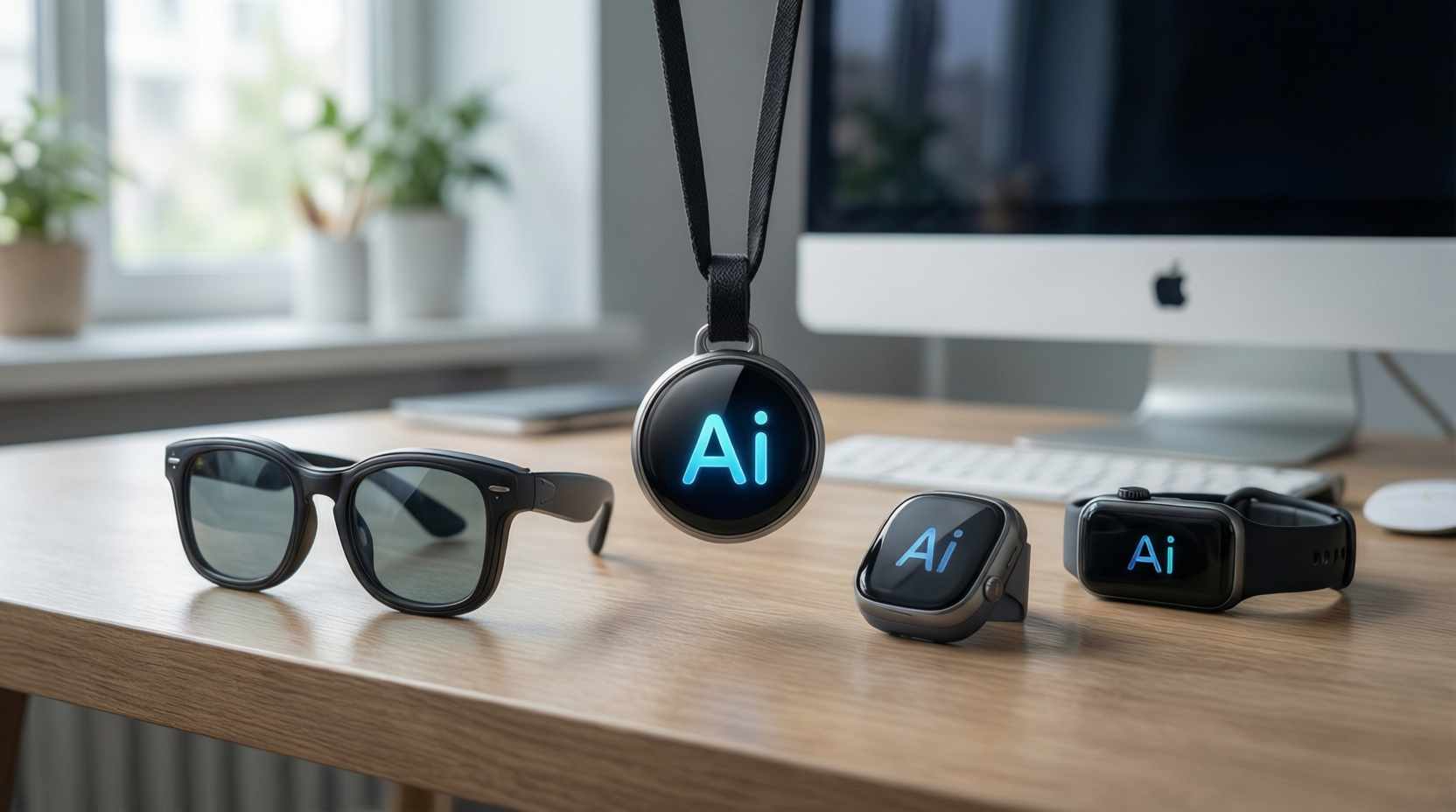
The AI gadget market has roughly sorted itself into three categories:
Voice-first wearables are succeeding. Meta Ray-Bans look like regular glasses, cost $299-$379, and do exactly one thing well: let you talk to an AI, take calls, and listen to music without reaching for your phone. The AI features — real-time translation, object recognition, voice search — are additive. The core product is something people already wear. Over a million units sold.
The Rabbit R1 is more interesting as a concept than a product. It has a screen, a camera, a voice interface, and a claimed "Large Language Model" that connects to your apps. At $199, it sold over 100,000 units on its first day. But reviews were mixed: the device often felt like a smartphone app running on custom hardware, rather than a genuinely new interface paradigm. The LAM (Large Action Model) that Rabbit promised turned out to be more marketing than reality.
The AI Pin model is struggling. The Humane Pin — a $699 wearable that projects information onto your palm — was the most anticipated AI gadget before launch. It was also the most disappointing. Overheating issues, slow response times, and a projection interface that was awkward in practice killed the vibe. The company raised $200 million and reportedly explored a sale in late 2024. That is not a product finding product-market fit.
Ambient AI devices are growing. The Plaud Note and Limitless Pendant are simpler: wearable recorders that transcribe and summarize your conversations. They are not trying to be your primary AI interface. They are trying to be a better notepad. That is a much lower bar to clear.
Why Ray-Bans Won
The Meta Ray-Ban story is instructive. Facebook (Meta) had tried hardware before — the Meta Quest was a solid product for VR enthusiasts, but it was not mainstream. Ray-Bans were different because they solved a specific, narrow problem: hands-free calling, music, and AI assistance, without asking you to change what you were wearing or how you behaved.
The smart glasses category had existed for years — Snap Spectacles, Google Glass — but failed for different reasons. Google Glass was creepy and expensive. Snap Spectacles were fun but gimmicky. Meta Ray-Bans were unremarkable glasses that happened to have good audio and, later, an AI assistant.
The lesson is not that AI hardware needs to be boring. It is that AI hardware needs to solve a specific problem better than the alternative, without making the user feel like they are wearing a science project.
What 11 Million Units Actually Means
11 million units is not large by smartphone standards — Apple sells that many iPhones in a few weeks. But it is meaningful for a category that did not exist five years ago.
The market size is also real in another sense: it is concentrated. Meta Ray-Bans alone account for the majority of the category. One successful product from one company is carrying the AI gadget narrative, with Rabbit and others filling out the long tail.
This is both healthy and concerning. Healthy because it means there is genuine demand. Concerning because it means the category is not as diverse as the headlines suggest. If Meta stumbles on Ray-Bans, or if the next version disappoints, the "AI gadget era" narrative could stall.
The Coming Iteration
The next wave is coming. Apple Vision Pro 2 is reportedly in development. Samsung has announced Galaxy AI Glasses. Brilliant Cat has a pin-style device. The category is still being defined.
What seems clear is that the successful products will share characteristics with Meta Ray-Bans: narrow focus, no or minimal UI, ambient rather than attention-hungry, and price competitive with the existing non-AI alternative. The products that will fail share characteristics with Humane Pin: ambitious AI features that do not actually replace something people already do well, high price, and a novel interface that asks users to change their behavior.
The AI gadget era is not a revolution. It is an evolution of existing devices with better voice interfaces and more contextual awareness. That is still worth paying attention to — 11 million units and counting.