
GPT-5.5: The Day OpenAI Stopped Selling a Model and Started Selling an Operating System
On April 23, 2026, OpenAI published a blog post with a deceptively simple tagline: "A new class of intelligence for real work."
Not "a better model." Not "faster inference." Not "lower hallucination rates." For real work.
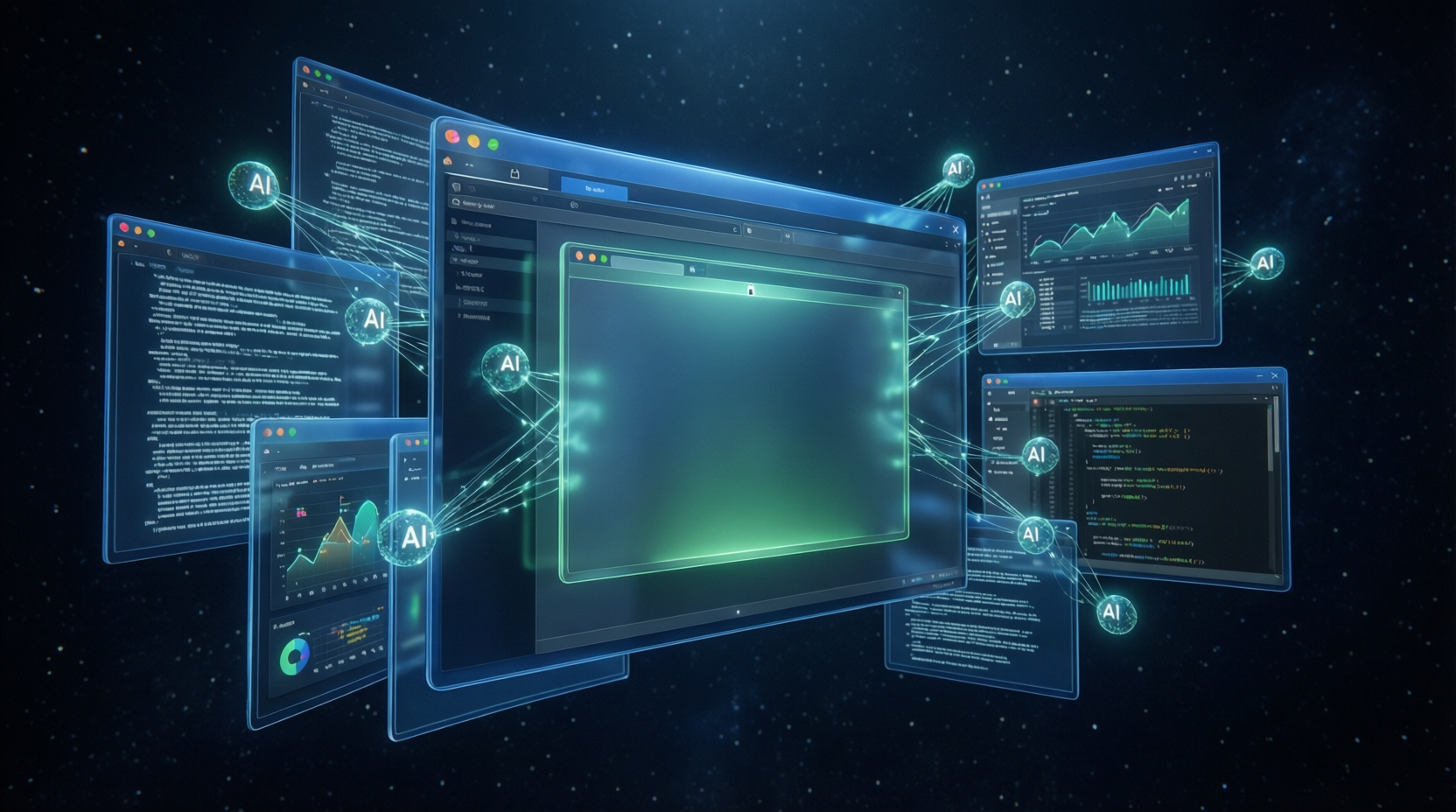
Those two words tell you everything. GPT-5.5 is not a model upgrade. It is a platform play. OpenAI is betting that the future of AI is not a smarter chatbot, but an operating system you live inside.
What Actually Changed
Let us start with what GPT-5.5 does differently from GPT-5:
Workflow Agents. This is the headline feature. GPT-5.5 can run persistent background agents that autonomously call tools, chain multiple tasks, and operate without you hovering over them. You give it a goal — "research these three competitors, compare their pricing, and draft a summary email" — and it does the whole thing. Not step by step, with you clicking "continue" between each phase. All at once, in the background, while you work on something else.
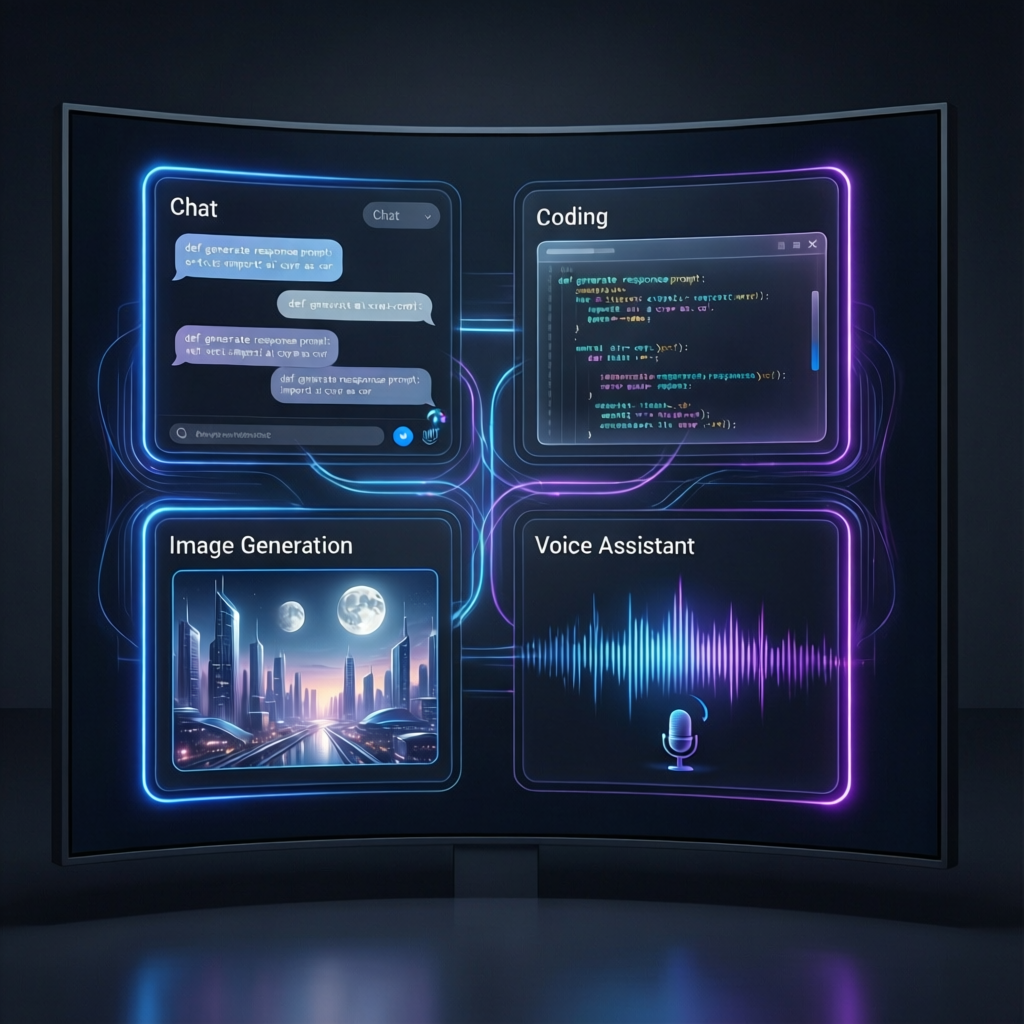
Multimodal consolidation. Text, image generation and editing, video, and voice are now unified. You do not switch between DALL-E and ChatGPT and Whisper. One interface, one model, one subscription.
Long-context reasoning. The model can process up to 400K to 1M tokens depending on the tier. That means you can feed it an entire codebase or a full financial report and ask questions that require synthesizing information across the whole document.
Reduced hallucination and better tool use. GPT-5.5 picks the right tool more often and makes fewer factual errors than GPT-5. These are incremental improvements — important, but not the story.
The story is the platform. The story is that OpenAI is no longer selling "a better model." They are selling a place where you do your work.
The Price Went Up. That Is Not an Accident.
GPT-5.5 costs more than GPT-5. TechCrunch summarized it in three words: "stronger, faster, more expensive."
This is not a pricing mistake. It is a pricing strategy. When your product becomes infrastructure — something people cannot work without — you can charge more for it. Think about AWS. Think about Microsoft Office. Think about the iPhone. None of them compete on price. They compete on being the thing you cannot replace.
An Nvidia engineer put it more bluntly. When asked what it would be like to lose access to GPT-5.5, they said: "It feels like being amputated."
That is the sound of lock-in. That is the sound of a product becoming infrastructure. And that is exactly what OpenAI wants.
The Superapp Strategy
The term "superapp" gets thrown around a lot, so let me be specific about what it means here. OpenAI is trying to make ChatGPT the place where you:
- 1. Start your work (ask an agent to research, draft, or analyze)
- 2. Execute your work (the agent runs tools, chains tasks, produces output)
- 3. Review and iterate (you check the output, refine, approve)
- 4. Communicate your work (draft emails, create presentations, generate reports)
All inside one platform. All without leaving ChatGPT.
This mirrors what WeChat did in China. WeChat won not because it was the best messaging app, but because it became the place where you message, pay, shop, read, and hail rides. You never leave. OpenAI is running the same play for knowledge work.
The Competitive Landscape
GPT-5.5 did not land in a vacuum. The week of April 2026 will be remembered as one of the most crowded in AI history:
- • April 16: Anthropic shipped Claude Opus 4.7, its most capable model yet.
- • April 23: OpenAI released GPT-5.5.
- • April 24: DeepSeek released V4, an open-source model with 1.6 trillion parameters and API pricing that undercuts OpenAI by roughly 9-18x on output tokens.
Three frontier model releases in nine days. The AI industry has entered a "release or die" phase where falling behind by even a few weeks costs you mindshare and customers.
Anthropic's response to GPT-5.5 was notable: on the same day, they announced new personal app connectors for Claude — integrations with Spotify, Uber Eats, TurboTax, and dozens of other services. This is Anthropic's counter to the superapp play: instead of building the superapp yourself, connect to the apps people already use.
DeepSeek's response was different: make it cheap and open. V4 is MIT-licensed, runs on Huawei chips, and costs a fraction of GPT-5.5. It is the "Android to OpenAI's iOS" — less polished, but anyone can deploy it.
What This Means for You
If you are a knowledge worker, GPT-5.5 changes your calculation in three ways:
First, you need to learn to delegate, not just prompt. The shift from "chat with AI" to "assign tasks to AI agents" is real. People who figure out how to break complex work into agent-friendly instructions will be far more productive than those who still use AI one question at a time.
Second, lock-in is the business model, and you are the product. When OpenAI makes ChatGPT the center of your workflow, switching costs go up. Your agents, your workflows, your history — they all live in ChatGPT. Moving to Claude or Gemini means rebuilding all of that. OpenAI knows this. That is why they raised the price.
Third, the open-source alternative is getting good fast. DeepSeek V4 is not as polished as GPT-5.5 for creative tasks. But for coding, long-context analysis, and straightforward knowledge work, it is competitive at a fraction of the cost. If you are price-sensitive or worried about vendor lock-in, it is worth testing.
Practical Advice
- 1. Start with the standard tier. Do not jump to the most expensive plan. Use GPT-5.5's workflow agents for real tasks — not toy demos — and measure how much time you actually save. Upgrade only when the ROI is clear.
- 2. Learn to write multi-step instructions. The skill that matters now is not "prompt engineering." It is "task decomposition": the ability to break a complex goal into a sequence of clear, unambiguous steps that an agent can execute. Practice this. It is the meta-skill of the next decade.
- 3. Keep a foot in another ecosystem. Try Claude for analytical work. Try DeepSeek for coding tasks. The more you diversify, the less leverage any single platform has over your pricing.
- 4. Watch for the App Store moment. The next logical step for OpenAI is to let third-party developers build and sell workflow agents on top of ChatGPT. When that happens, the superapp becomes self-reinforcing — and switching costs go through the roof.
What to Watch
- • Will OpenAI open workflow agents to third-party developers? If yes, the superapp strategy is real. If no, it is just a feature.
- • How will Anthropic and Google respond? Claude's app connectors are a start, but they need their own workflow agent story.
- • Can DeepSeek V4's open-source model pull developers away from ChatGPT? The cost advantage is massive, but OpenAI has the distribution.
The AI industry is no longer about who has the best model. It is about who owns the interface. GPT-5.5 is OpenAI's answer to that question. Whether it is the right answer depends on whether you — and millions of others — decide to live inside it.
References